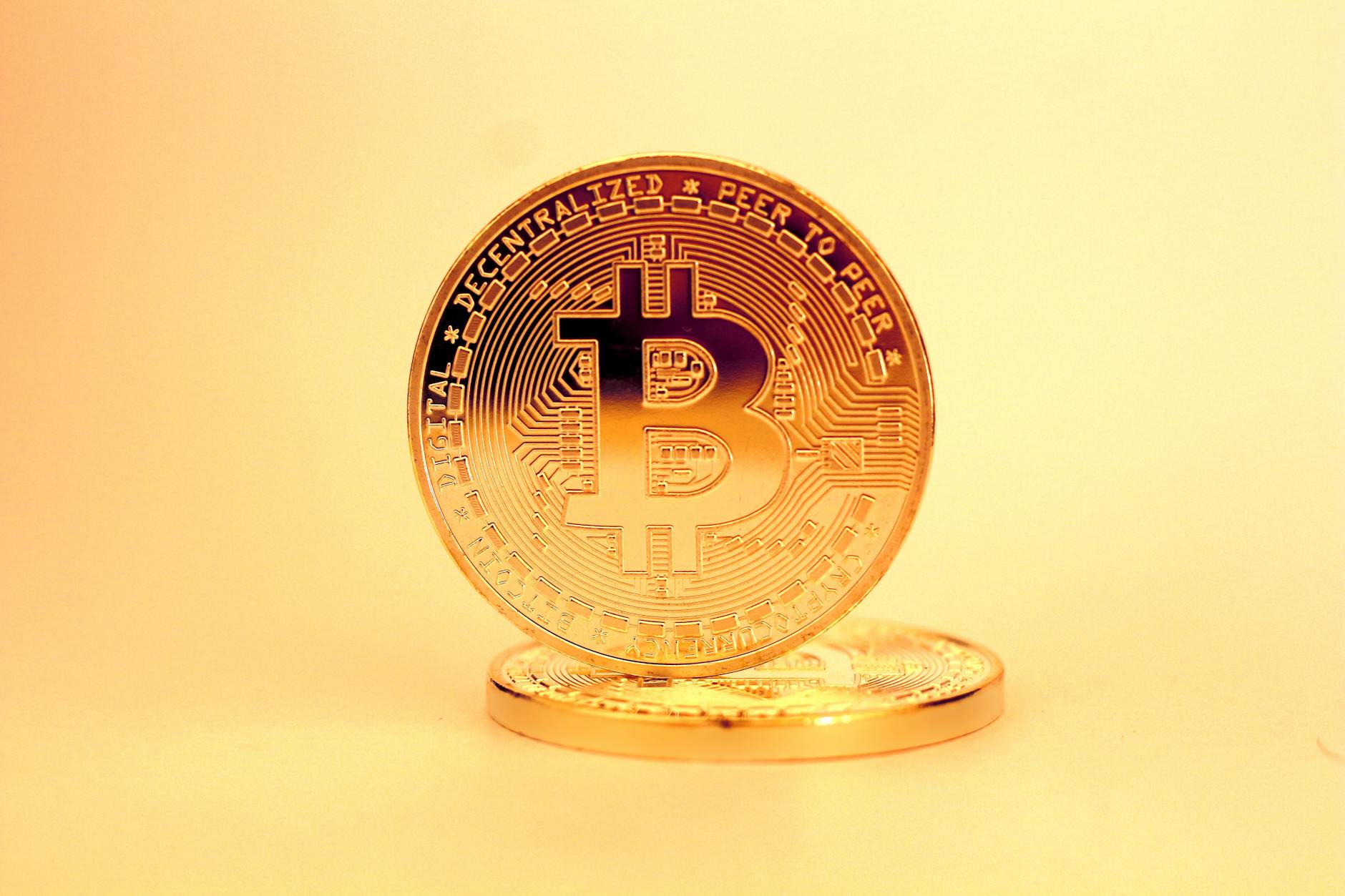
Bitcoin or Ethereum: Which Should You Buy in 2026?
I get asked the same question at least twenty times a week. It comes from university students, from forty-something professionals, from retirees who caught a mention on the evening news. The question is always identical: "Marco, but ultimately, which is a better investment—Bitcoin or Ethereum?"
Let's be straight with each other: there's no universal answer. But there is a right answer for every investor profile. And the data—the real stuff, not tweets from crypto gurus—tells us something precise and often uncomfortable.
In this piece, I'm going to break down the two biggest cryptocurrencies using numbers current as of May 2026, compare their historical performance and real-world use cases, and give you a straightforward take on where to position yourself today. No promises of easy riches. No hype.
Bitcoin in 2026: The Safe Haven Nobody Expected
Bitcoin just turned seventeen. Who would have bet back in 2009 that a digital currency born anonymously would reach a market cap comparable to all the physical gold extracted in the last five years?
According to CoinMarketCap, on May 15, 2026, Bitcoin is trading around $91,400, with a total market capitalization exceeding $1.81 trillion. Dominance—Bitcoin's share of the total crypto market—sits at 55.3%. That number tells you something important: in a market fragmented across thousands of tokens, more than half of all value lives in a single asset.
What's driving this relative stability? Three main factors.
First, institutional adoption. The spot Bitcoin ETFs approved in the US in early 2024 opened doors to pension funds, family offices, and publicly traded companies. BlackRock, Fidelity, and other asset managers have accumulated over $350 billion in Bitcoin exposure through regulated instruments combined. This has reduced structural volatility: today Bitcoin doesn't drop as hard and bounces back more slowly than during the 2017-2021 cycles.
Second, April 2024's fourth halving cut block rewards to 3.125 BTC per block. The deflationary effect is mathematical, not debatable. With growing institutional demand and compressed supply, the upward pressure is structural over the long run.
Third—and nobody talks about this, but it's reality—Bitcoin has stopped being seen as pure speculation. In many countries with unstable currencies (Argentina, Turkey, Nigeria), it functions as genuine store of value. It's not libertarian philosophy. It's economic survival.
Ethereum in 2026: So Much More Than Currency
Ethereum is a different story. A more complicated story, richer in nuance, and—in some ways—more interesting for anyone who wants to do something active with their capital.
On May 15, 2026, ETH is trading around $3,850, with a market cap of roughly $463 billion. The ETH/BTC ratio has dropped to about 0.042, meaning Ethereum has underperformed Bitcoin over the last two years. A number that sparks plenty of debate.
But price is only part of the picture. Let's look at what surrounds Ethereum.
The DeFi ecosystem. According to CoinGecko, the total value locked in DeFi protocols on Ethereum exceeds $78 billion, despite competition from Solana, Base, and other Layer 2 solutions. Protocols like Aave, Uniswap, and Lido still dominate the space with weekly trading volumes in the $12-15 billion range.
Staking. With the full transition to Proof of Stake completed in 2022, ETH holders can stake their coins and earn returns. Today's net staking yield on Ethereum hovers around 3.8–4.2% annually in ETH, varying based on network congestion. It's not extraordinary, but it's real and verifiable on-chain—very different from those 20% annual promises floating around on certain exchanges.
Layer 2s. Arbitrum, Optimism, Base, and others have drastically cut transaction costs on Ethereum, partly solving the historical problem of high gas fees. The network averaged 4.2 million transactions per day in the first quarter of 2026.
The problem with Ethereum—and I'll say it plainly—is fragmented messaging. Bitcoin has a simple story: digital gold, store of value, scarcity. Ethereum tries to be everything: smart contract platform, deflationary asset through EIP-1559, infrastructure for NFTs, DeFi, real-world asset tokenization. When a product tries to do everything, it often struggles to communicate a single unique value.
Head-to-Head: Bitcoin vs Ethereum—The Numbers That Matter
| Metric | Bitcoin (BTC) | Ethereum (ETH) | |---|---|---| | Price (15/05/2026) | ~$91,400 | ~$3,850 | | Market Cap | ~$1.81 trillion | ~$463 billion | | Market Dominance | 55.3% | 14.1% | | Annual Staking Returns | N/A | 3.8–4.2% | | Max Supply | 21 million | No hard limit | | Consensus Mechanism | Proof of Work | Proof of Stake | | Transactions/Day (Q1 2026) | ~450,000 | ~4.2 million | | 3-Year Performance (2023-2026) | +287% | +143% |
The numbers are clear. Bitcoin has outperformed Ethereum by nearly double over the last three years. But looking only at past performance is a classic mistake. The real question is: which of the two has more structural growth potential over the next 3-5 years?
How to Position Yourself Today: 5 Actionable Strategies
I don't want to stop at theory. Here's what you can do concretely, with verifiable logic.
1. Gradual Bitcoin Accumulation (DCA) for Newcomers Dollar Cost Averaging—buying a fixed amount every week or month—remains the most effective strategy for entering a volatile market. Over a 3-year horizon, DCA on BTC has historically lowered your average purchase price by 18-22% compared to lump-sum entry. Platforms like Coinbase or Kraken offer this automatically.
2. 70/30 Allocation for Both-Sides Exposure A classic split I see many crypto portfolio managers use: 70% Bitcoin, 30% Ethereum. It gives you the relative stability of BTC with ETH's extra return potential (staking plus appreciation). Rebalance every six months.
3. Ethereum Staking for Long-Term Holders If you own ETH and don't plan to sell for the next 2 years, putting it into staking via services like Lido (stETH) or directly through Coinbase generates ETH returns. On 10,000 euros worth of ETH earning 4% annually, you accumulate about 400 euros in additional ETH each year—without lifting a finger.
4. Avoid Leverage Unless You're a Pro Trader This should be obvious, but it's not. Leveraged crypto futures liquidate 84% of retail traders within their first year, based on aggregated exchange data. Leverage amplifies both gains and losses. On already-volatile assets like BTC and ETH, it's a dangerous combination.
5. Store Safely If you hold more than 5,000 euros in crypto, using a hardware wallet (Ledger, Trezor) isn't optional. It's mandatory. In 2025, according to Chainalysis, thefts from exchanges and custodial wallets exceeded $2.2 billion. Don't leave significant holdings on centralized exchanges long-term.
My Take
In my view, in 2026 the question "Bitcoin or Ethereum?" is poorly framed. They're different tools answering different needs.
Bitcoin is a long-term position, almost like an inflation-indexed bond with asymmetric upside. It generates no passive income, has no direct utility, but it has something Ethereum doesn't: narrative simplicity. Institutional investors understand "digital gold with 21 million units." They don't always understand "programmable platform with variable deflationary mechanics."
Ethereum, from my experience, suits someone who already has a Bitcoin foundation and wants to actively participate in the DeFi economy. A 4% staking return in a falling-rate environment (current ECB rates at 2.5%) shouldn't be dismissed.
The truth is, anyone who took positions in both disciplined ways, without getting swept up in market euphoria, built solid portfolios. The problem isn't which crypto to buy. It's investor behavior: panic-selling, euphoria-buying, taking advice from influencers with no real skin in the game.
The Case of Giulia: A Common Mistake That's Costly
Giulia, 34, a tax consultant in Bologna, reached out to me in February 2026. She'd invested 18,000 euros in Ethereum in November 2021, at the peak of around $4,700. She held on, convinced by the "flippening" narrative—the idea that ETH would overtake BTC by market cap. It never happened.
In early 2023, with ETH around $1,200, she sold everything in panic. Realized loss: about 11,000 euros, or 61% of her capital.
Then, in 2024, she bought back in at $3,100, this time more rationally, with staged entries. Today she's at breakeven. But those 11,000 euros in losses could have been avoided with one thing: not selling during a drawdown if your time horizon is multi-year.
Giulia's mistake wasn't buying Ethereum. She'd entered too high, without an exit plan, and reacted emotionally. This same pattern repeats identically with Bitcoin, Ethereum, any volatile asset. The market isn't the problem. We are.
Nobody says this, but it's the truth: most crypto losses don't come from picking the wrong token. They come from wrong behavior at the wrong time.
Frequently Asked Questions
Q: Bitcoin or Ethereum—which has more growth potential in 2026? A: Bitcoin has a more solid institutional foundation and simpler narrative, both supporting demand in the medium term. Ethereum offers additional potential tied to DeFi growth and staking, but with more uncertainty. For a conservative investor, BTC remains the more defensible choice.
Q: Is it still worth buying Bitcoin at $91,000? A: That depends on your time horizon. Over 5 years, stock-to-flow models and historical cycle analysis suggest room for appreciation. Over 12 months, the risk of a 30-40% correction is real and should be factored in. Nobody knows future prices: anyone claiming they do is lying.
Q: What does DeFi mean and why does it matter for Ethereum? A: DeFi (decentralized finance) is the ecosystem of financial protocols—lending, exchanges, yield farming—running on blockchain without traditional intermediaries. Ethereum is the dominant DeFi platform, with over $78 billion locked in its protocols. Without DeFi, Ethereum would lose much of its utility and the demand for ETH as network "fuel."
Q: Are cryptocurrencies taxed in Italy in 2026? A: Yes. Since 2024, crypto capital gains are taxed at 26% above an annual threshold of 2,000 euros in profit. Losses can offset gains in the same year. You're required to report crypto holdings in your tax return's RW section if the average value exceeds 15,000 euros annually. Consult a crypto-savvy accountant before trading significant amounts.
Q: For a beginner, what's the safest way to buy Bitcoin or Ethereum? A: Start with a regulated exchange registered with Italian authorities (like Coinbase, Kraken, or Young Platform). Buy small amounts you'd be comfortable losing entirely. After accumulating 1,000-2,000 euros, consider a hardware wallet for self-custody. Don't trust platforms promising guaranteed returns or generous "cashback" deals.
The Bottom Line
Three solid takeaways after all this analysis.
First: Bitcoin is the safe harbor of the crypto world. A $1.81 trillion market cap, record institutional adoption, simple narrative. If you can hold for at least 3 years, it's the foundation of any serious crypto portfolio.
Second: Ethereum is the layer on which the future digital economy gets built. With $78 billion in DeFi and active developer communities, it has structural demand beyond speculation. But its road is more complex, its narrative more fragmented.
Third: The real wealth in crypto doesn't come from picking the "right" asset. It comes from disciplined behavior: consistent small investments, resisting panic during crashes, holding through cycles. The investor beats the market. Always.
Start small. Think long-term. Sleep well.