Charging Stations in Italy 2026: Complete Map and How They Work
Anyone who owns or is considering purchasing an electric car or zero-emission SUV knows well that one of the main concerns doesn't involve vehicle range, but rather the availability of charging points along Italian roads. The so-called "range anxiety" is often fueled by a lack of knowledge about existing infrastructure, which today in Italy is far more widespread than many people think.
As of May 1, 2026, according to data from the Ministry of Environment and Energy Security (MASE) and the Motus-E portal, the number of public and publicly accessible charging points across the national territory exceeded 70,000 units, distributed across more than 35,000 stations. A huge jump compared to approximately 30,000 points in 2023, the result of public investments, dedicated EV incentives, and growing private interest in sustainable mobility.
However, simply knowing the total number of charging stations isn't enough. It's essential to understand how they work, what the differences are between various power levels, how to read the infrastructure map, and how to take advantage of available incentives to reduce purchase and charging costs. In this article, we guide you through everything you need to know.
The Map of Charging Stations in Italy: Where They Are and Why the North-South Divide Persists
The distribution of charging stations in Italy is not uniform. As confirmed by the latest Motus-E semi-annual report (April 2026), Northern Italy concentrates approximately 58% of the total public infrastructure, with Lombardy, Piedmont, Veneto, and Emilia-Romagna leading the way. Central Italy accounts for around 25%, driven by Lazio and Tuscany. Southern Italy and the Islands, unfortunately, still cover only the remaining 17%, despite PNRR investments accelerating spread in regions like Sicily, Calabria, and Campania.
Where to find charging stations: platforms to use
To navigate the jungle of charging infrastructure, several reliable tools exist:
- PlugShare: the most popular platform globally, with a community-updated map and filters for connector type and power
- Nextcharge (formerly Blink Italy): institutional portal updated in real-time with official Italian network data
- ABRP (A Better Route Planner): ideal for planning long trips with an electric car or electric SUV, suggests optimal charging stops
- Native manufacturer apps: Tesla, BMW, Volkswagen and other brands offer maps integrated into vehicle infotainment systems
On the highway front, the network has grown significantly denser. Following the European mandate (adopted by Italy in 2025) to install rapid charging stations every 60 km on major TEN-T network routes, today almost all highway tollbooths on the A1, A4, A8, A14, and A22 routes have at least one DC fast-charge station of 150 kW or higher. Some strategic hubs, such as the one at Melegnano on the A1 or Rosignano on the A12, have HPC (High Power Charging) stations up to 350 kW.
How Charging Stations Work: Power, Connectors, and Charging Standards
Understanding the difference between various types of charging is the first step toward using charging stations efficiently and without surprises. Not all "charging stations" are the same: charging speed depends on the power supplied and compatibility with the electric car or electric SUV you own.
Three levels of charging
1. Slow Charging (AC Slow Charging) — 2.3 to 7.4 kW This is the typical mode of home wallboxes and many charging stations in supermarket parking lots, hotels, and shopping centers. With a power of 7.4 kW, a car with a 60 kWh battery fully charges in approximately 8-9 hours. Ideal for overnight or extended stops.
2. Semi-Rapid Charging (AC Fast Charging) — 11 to 22 kW Still using alternating current, this is the most common power in public city charging stations. It charges 70-80% of a medium-sized electric SUV in approximately 3-4 hours.
3. Rapid and Ultra-Rapid Charging (DC Fast Charging) — 50 kW to 350 kW Here we enter the direct current territory. Rapid DC chargers (50-150 kW) allow you to recover 80% of charge in 30-45 minutes. HPC stations of 250-350 kW, increasingly common, reduce times to 15-20 minutes for compatible models (such as Hyundai IONIQ 6, Kia EV9, Porsche Taycan, Audi Q6 e-tron).
Connectors: what you need to know
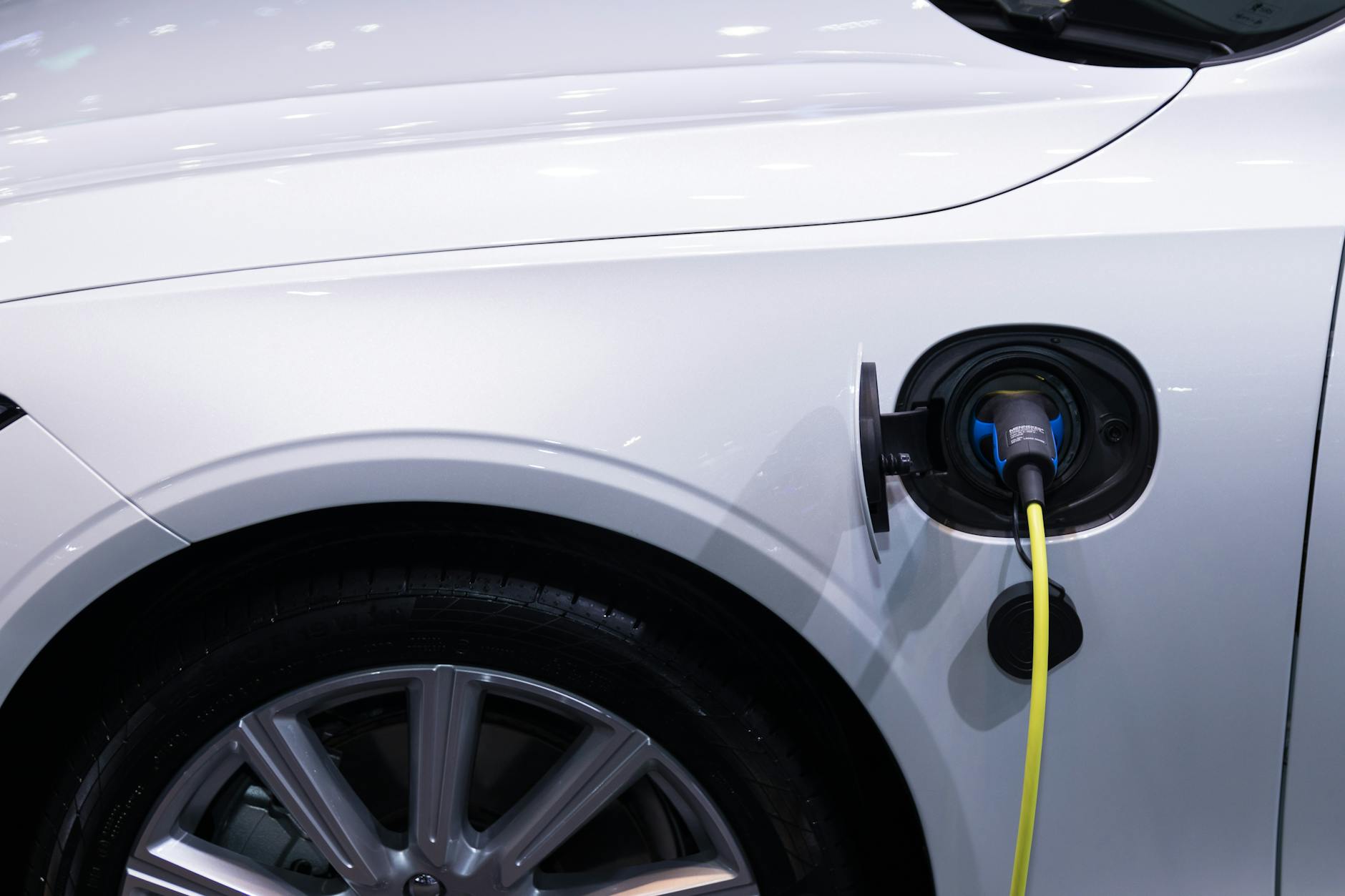
- Type 2 (Mennekes): the standard European connector for AC charging. Virtually universal for electric cars and electric SUVs sold in Europe
- CCS2 (Combined Charging System): the European standard for rapid DC charging. Adopted by almost all European, Korean, and American manufacturers
- CHAdeMO: in rapid decline, still used by some Nissan and Mitsubishi models
- Tesla NACS (North American Charging Standard): after opening the Supercharger network in Europe to other brands, many manufacturers are adopting CCS-NACS adapters
Since 2025, Tesla's Supercharger network in Italy is completely accessible to all electric cars with CCS2 connectors, through the Tesla app or RFID cards. This has effectively doubled the availability of ultra-rapid charging points on highways for all drivers.
EV Incentives for Charging and Vehicle Purchase in 2026
EV incentives represent one of the main drivers of electric car and zero-emission SUV adoption. In 2026, the panorama of incentives in Italy has been reorganized in a more structured way than in previous years, with fewer sudden peaks and drops.
Ecobonus 2026: what it provides
The Ecobonus decree, renewed with the 2026 Budget Law, provides the following contributions for purchasing new electric vehicles:
- Electric BEV car (private individuals): up to 6,000 euros of incentive, increased to 8,000 euros in case of scrapping a Euro 0-3 vehicle. The ISEE threshold for maximum bonuses is set at 35,000 euros
- Electric BEV SUV (private individuals): falls within the same brackets, with the bonus applicable to D/E segment vehicles as long as the price does not exceed 45,000 euros including VAT
- Plug-in hybrid vehicles (PHEV): reduced contribution of 2,000 euros with scrapping, not available without scrapping
- Legal entities and companies: access to incentives through the subsidized long-term rental channel and 100% tax deductibility for company BEV vehicles
Incentives for home charging infrastructure
Not just for car purchase: in 2026, the following contributions remain active for private charging:
- 50% tax deduction for installing home wallboxes, up to a maximum spending of 3,000 euros (maximum deduction 1,500 euros), distributed over 10 years
- Condominium charging station bonus: up to 75% deduction for installations in condominiums, with spending limit of 1,500 euros per apartment
The National Charging Stations Plan (PNC)
Funded with PNRR resources of approximately 713 million euros, the National Charging Stations Plan has already led to the installation of over 18,000 public charging points in municipalities under 50,000 inhabitants and in less-served areas of the South. The stated goal is to reach 30,000 new charging points by end of 2026.
Practical Tips for Charging in Italy: How to Handle Every Situation
Having a clear theoretical picture is useful, but in practice driving an electric car or electric SUV requires some new habits compared to the gasoline world. Here are the most helpful tips.
Before your trip:
- Always plan your route with ABRP or your integrated navigation system, entering your starting battery level
- Check real-time charging station availability on PlugShare: some stations may be temporarily out of service
- Download apps from major operators (Enel X Way, Be Charge, Free To X, Recharge, Ionity) and add a payment method
During charging:
- Most public stations are activated via app or RFID card: always carry a backup card
- As of 2026, payment with credit/debit card (contactless POS) is mandatory by law on all new public charging stations: the most recent stations already support it
- Don't always charge to 100%: to preserve your battery, stop at 80% during rapid stops
- On highways, use HPC only if your vehicle supports it: charging a 50 kW car at a 350 kW station doesn't speed up charging
Average public charging costs in Italy (May 2026):
- Slow/semi-rapid AC: 0.40 – 0.55 €/kWh
- Rapid DC (50-150 kW): 0.55 – 0.70 €/kWh
- Ultra-rapid HPC (>150 kW): 0.70 – 0.90 €/kWh
Frequently Asked Questions
Q: How do I find a charging station near me? A: The most reliable apps are PlugShare, ABRP, and native operator apps like Enel X Way or Be Charge. Many navigation systems integrated into electric cars directly display available stations with real-time updates on operational status.
Q: Can I charge an electric car on the highway without a subscription? A: Yes. As of 2025, all public highway stations must accept card payment (contactless POS) without needing an app or cards. Some networks like Free To X and Ionity have allowed this for years with direct payment.
Q: Do the 2026 EV incentives apply to electric SUVs as well? A: Yes, provided the vehicle price does not exceed 45,000 euros including VAT. Many mid-segment electric SUVs fall within this threshold (e.g., Jeep Avenger Electric, Renault Scenic E-Tech, BYD Atto 3).
Q: How long does it take to fully charge an electric car? A: It depends on the charging station's power and battery capacity. With a 7.4 kW wallbox, a 60 kWh battery fully charges in approximately 8-9 hours. With a 150 kW HPC station, 80% can be recovered in 25-35 minutes on compatible models.
Q: Has the National Charging Stations Plan really changed the situation in Southern Italy? A: Partially yes. Thanks to PNRR funds, many Southern municipalities now have at least one public charging station. However, the gap with the North persists: rural areas and Southern highways remain less covered compared to Northern routes.
Conclusion
Italy in 2026 is a country profoundly different from three years ago in terms of charging infrastructure. With over 70,000 public charging points, structured EV incentives, and a rapidly evolving highway network, driving an electric car or zero-emission SUV has become significantly simpler and more convenient. Of course, challenges remain — the geographic North-South divide, operator inconsistencies, still-variable costs — but the direction is clearly the right one.
If you're thinking about purchasing your first electric car or switching to an electric SUV, this is probably the best time: incentives are active, charging stations are multiplying, and vehicle prices are dropping. The practical advice? First, download a map like PlugShare and verify coverage in your usual usage area. Then, plan a test drive with a rental car: you'll discover that charging is much less complicated than you think.