Hometown Heroes: How the 2026 World Cup Is Redefining What It Means to Root for Your Country
As nations finalise their squads for the next World Cup cycle, the growing trend of tracing players' local roots is transforming how fans connect with the global game.
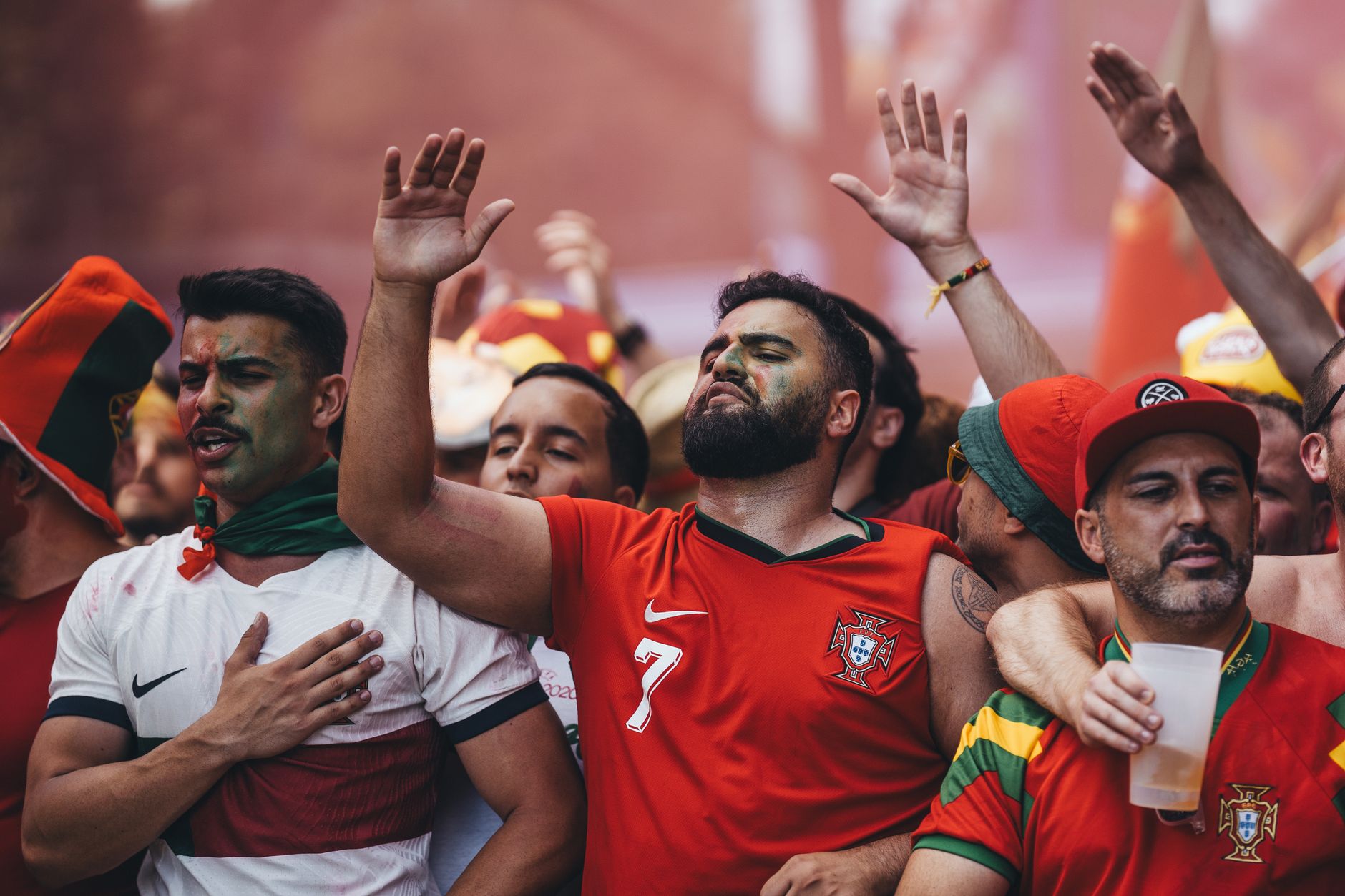
The Beautiful Game Gets Personal
There is a particular kind of pride that surges through a community when one of its own steps onto the world's biggest sporting stage. A kid who once kicked a ball in a local park, whose family shopped at the same supermarket as yours, whose school corridors echo with the same memories — suddenly standing under floodlights, representing an entire nation before billions of viewers. This is the emotional core of what football journalists and data teams have been tapping into with renewed enthusiasm: the mapping of World Cup stars back to their local roots, down to the very postcode.
The idea that elite sport is deeply intertwined with geography is not new. But in an era of hyper-globalised football — where players are scouted as teenagers, shipped across continents, and developed within academy systems far from home — the thread connecting a professional footballer to a specific town, village, or urban neighbourhood has become thinner, and therefore more precious. Interactive tools that allow fans to discover which World Cup-level players grew up near them are doing more than satisfying curiosity. They are reconstructing a sense of local identity within the otherwise abstract spectacle of international football.
How the Mapping Works
The concept behind postcode-based player lookup tools is straightforward but requires significant research infrastructure. Journalists and data teams compile biographical information on squad members from participating nations — birthplaces, childhood homes, the clubs where players first trained — and cross-reference that data against geographic identifiers such as postcodes, counties, or municipalities.
The result is a searchable database that allows a reader in, say, a mid-sized English town or a suburb of Dublin to type in their location and discover whether any player competing on the global stage has roots in their community. The tool transforms passive spectators into stakeholders, giving them a specific reason to follow a particular player's journey through the tournament.
Such tools also expose some genuinely surprising connections. The modern football pipeline is complex: a player born in West Africa to parents who later emigrated to Northern Europe, who then developed their skills in youth academies across multiple countries before earning international recognition, may have authentic ties to several communities simultaneously. Mapping those connections rigorously requires careful sourcing and sensitivity to the nuances of diaspora identity.
The Rise of the Diaspora Player
One of the most significant developments in international football over the past two decades is the increasing prominence of diaspora players — athletes who represent nations other than the country of their birth, or whose family histories span multiple continents. This phenomenon is particularly visible in European national teams, many of which now include large numbers of players with family roots in Africa, Latin America, the Caribbean, and Asia.
For communities shaped by migration, the sight of a player who shares their heritage competing at a World Cup carries a weight that goes beyond sporting allegiance. It is a form of visibility and validation. A Senegalese-French player celebrated in both Dakar and Lyon; a Ghanaian-British midfielder cheered in Accra and in Birmingham — these athletes embody the complexity of modern identity in ways that statistics alone cannot capture.
The postcode lookup approach, when applied thoughtfully, can honour this complexity. Rather than flattening a player's background into a single national identity, it can highlight the multiple communities that have shaped them, encouraging fans across different cities and countries to feel a genuine connection to the same individual.
Local Pride as a Commercial and Cultural Force
Beyond the emotional dimension, the localisation of World Cup fandom has measurable cultural and commercial implications. Tourism bodies, local councils, and grassroots football organisations have long understood that a famous alumnus — even one who left at the age of eight — can become a source of civic pride and economic activity.
When a player from a small town makes it to the World Cup, the local pub that screens the match, the school that updates its trophy cabinet display, the amateur club that posts a tribute on social media — all of these micro-moments of celebration aggregate into something meaningful for community cohesion. In periods of social fragmentation, shared local pride around a sporting figure can serve a quietly integrative function.
Media organisations have been increasingly sophisticated in exploiting this dynamic. Rather than simply broadcasting matches to a mass audience, they are building layered digital experiences that invite personalisation. The postcode tool is one expression of this broader strategy: making a global event feel intimate and relevant to the individual viewer's specific life.
The Geography of Talent: What the Data Reveals
When you aggregate the birthplaces and early development locations of World Cup players across multiple tournaments, patterns emerge that reflect broader social and economic realities. Talent, it turns out, is not randomly distributed — it clusters in particular environments.
Certain cities consistently produce elite footballers at rates disproportionate to their populations. This over-representation is rarely accidental. It tends to reflect a combination of factors: strong grassroots infrastructure, cultural emphasis on the sport, access to high-quality coaching at the developmental age, and sometimes specific socioeconomic conditions that make football an especially compelling pathway to success.
The concentration of talent in urban centres with large immigrant populations is particularly notable. Cities like Paris, London, Brussels, and Amsterdam have functioned for decades as incubators for international football talent, producing players who go on to represent a wide range of national teams. Understanding this geography is valuable not just for trivia purposes but for policymakers and football administrators thinking about where to invest in facilities and coaching.
Conversely, the tool also reveals gaps — regions that produce few or no professional players, despite having substantial populations. These absences can point to structural inequalities in access to the sport: inadequate facilities, underfunded local clubs, or social barriers that prevent talented young people from being identified and nurtured.
From Grassroots to the Global Stage: The Development Pipeline
For the vast majority of World Cup players, the journey to the tournament began not in a gleaming academy but in a local park, a cage pitch, or a modest community club. The early years of a footballer's development — typically between the ages of five and twelve — are almost always rooted in a specific local environment. It is during this phase that fundamental technical skills, love of the game, and competitive instincts are formed.
The connection between locality and early development means that even players who leave their hometowns very young carry something of those places with them. The style of play learned on a particular kind of surface, the competitive habits formed in a particular local league, the coaching philosophy absorbed at a formative age — these influences persist throughout a career, however far the player travels.
Grassroots clubs are increasingly aware of their role in this pipeline. When a former youth player reaches a World Cup, it validates the club's work and — practically speaking — can attract new members and funding. Some clubs have begun proactively documenting the pathways of their alumni, creating a tangible record of their contribution to the sport at the highest level.
Fan Identity in the Digital Age
The appetite for tools that personalise the World Cup experience reflects a broader shift in how sports fans relate to major international events in the digital era. The traditional model of national fandom — rooting for the country on your passport, full stop — is giving way to a more layered and idiosyncratic set of allegiances.
Viewers now routinely follow players rather than teams, support nations with which they have a personal connection through heritage or travel, and construct their own narratives around tournaments that go beyond the official national storylines. Social media has accelerated this individualisation of fandom, enabling supporters to curate their own World Cup experience from a vast menu of available content.
In this context, the postcode lookup tool is a clever piece of audience engagement. It gives a reader a specific, personal hook into the tournament — a player to follow, a story to invest in — that goes beyond generic national pride. It also implicitly acknowledges that the audience is not monolithic: different readers will find different heroes in the same global event, and that multiplicity of attachment points is a strength rather than a weakness.
Why Local Stories Matter in a Global Tournament
At its deepest level, the enthusiasm for tracing World Cup players back to their local roots is about something that transcends football. It is about the human need for connection — for evidence that the vast, impersonal machinery of global sport still has room for the particular and the personal.
A World Cup is simultaneously the most universal and the most tribal of sporting events. It is watched by billions, contested by nations, governed by a global bureaucracy, and financed by multinational corporations. And yet it is also, somehow, about the kid from your street, the family whose name you recognise, the town whose landmarks you can picture.
The tension between those two scales — the global and the intensely local — is what gives the tournament its enduring emotional power. Tools and stories that foreground the local end of that tension are not merely journalistic novelties. They are doing the important work of reminding fans why they care in the first place: not because of geopolitical allegiance or television rights, but because somewhere in the squad, there might just be someone who grew up hearing the same rain fall on the same rooftops as you.
As the next World Cup cycle gathers momentum and nations assemble the squads that will carry their hopes into the tournament, those local connections will only become more meaningful. In a sport that increasingly resembles a borderless global market, the postcode still matters — perhaps more than ever.
Sources
About the author
Redazione NotiziHubThe NotiziHub newsroom selects the stories that matter from leading outlets and tells them clearly and verifiably, always citing its sources. Articles are produced by our editorial system with the help of artificial intelligence — the method is set out in our Editorial policy.