Iran Shoots Down US Military Helicopter: Trump Vows Response as Middle East Tensions Escalate
President Trump confirmed that Iran shot down an American Apache helicopter, with both crew members rescued safely, and warned that the United States 'must' respond to the attack.
An Act of War in the Skies
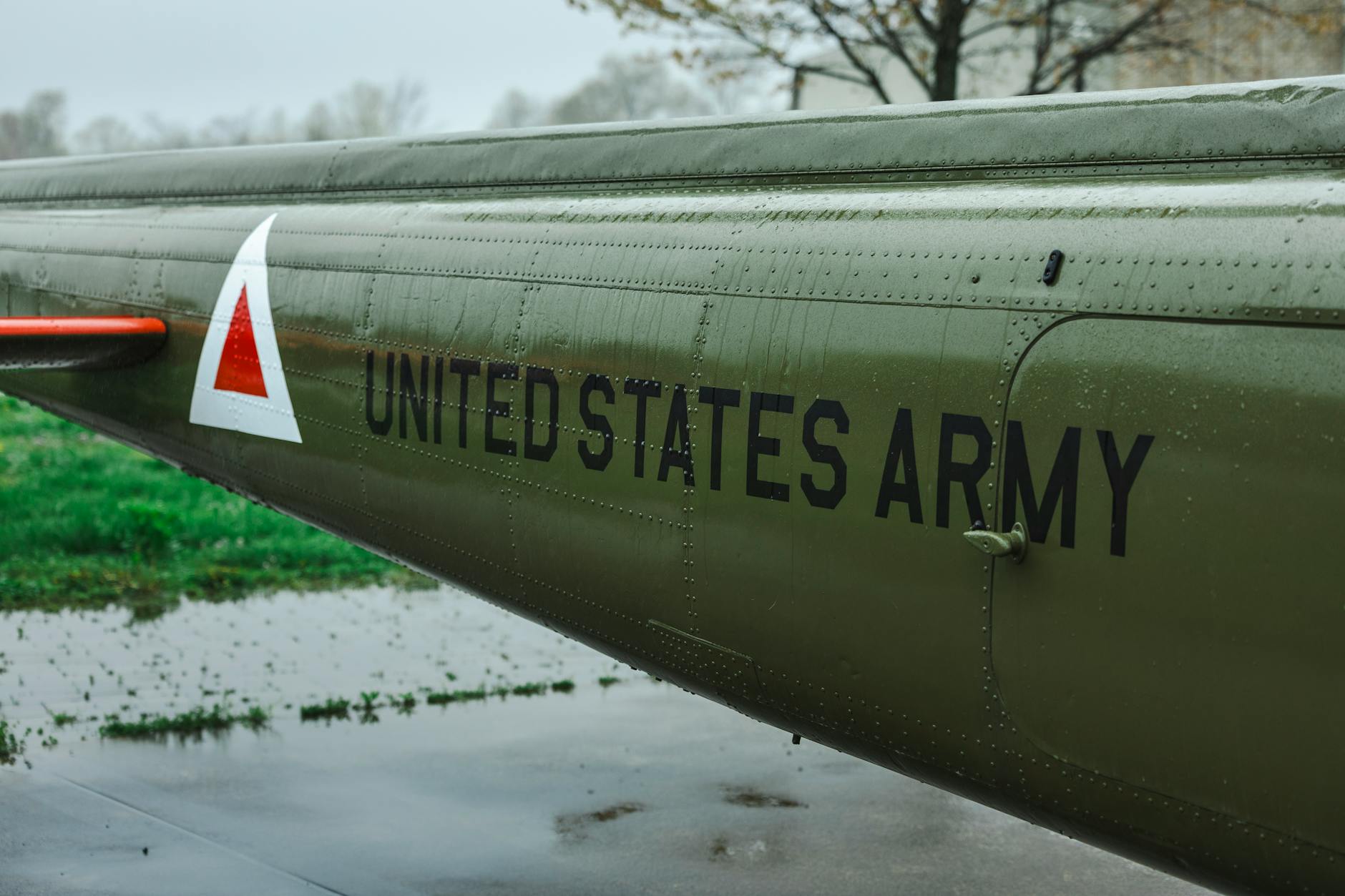
A US military Apache helicopter has been shot down by Iran, President Donald Trump confirmed in a social media post that sent shockwaves through diplomatic and military circles already on edge over the simmering conflict in the Middle East. The two crew members aboard the aircraft were rescued unharmed, with the recovery made possible by an American sea drone — a detail that itself underscores the increasingly high-tech, multi-domain nature of modern military confrontations in the region. Trump, in characteristically direct language, declared that the United States "must, of necessity, respond to this attack," leaving little ambiguity about Washington's intentions in the hours and days ahead.
The incident marks a significant and potentially pivotal escalation in a conflict that has already drawn in multiple state and non-state actors. While US forces and Iranian-backed groups have traded blows through proxies for years — and more directly in recent months — the downing of a crewed US military helicopter by Iran represents a qualitatively different kind of provocation, one that carries enormous implications for the trajectory of the broader regional crisis.
What Happened: The Incident and the Rescue
According to information confirmed by President Trump, an Apache helicopter — one of the US military's most capable and widely deployed attack helicopters — was shot down following an attack attributed directly to Iran. The two pilots aboard survived the crash and were subsequently rescued by an American sea drone, an autonomous or remotely operated maritime vessel that proved capable of conducting a life-saving operation in a hostile environment.
That both crew members escaped unharmed is undoubtedly a relief for US military planners and the White House alike. In past incidents where American service members have been killed by Iranian actions — whether directly or through proxy forces — the political and military pressure to retaliate has been immense. The fact that no American lives were lost may provide a narrow window of diplomatic space, even as Trump's public statements suggest a forceful response is being considered.
The precise location of the incident has not been fully detailed in available reporting, but the involvement of a sea drone in the rescue operation suggests the helicopter may have gone down over or near a body of water in the region — potentially the Persian Gulf, the Red Sea, or waters adjacent to the ongoing zones of conflict.
Trump's Response: Swift, Public, and Unambiguous
President Trump's reaction was swift and delivered in the medium he favors above all others: social media. His post confirmed the attack, confirmed the safety of the pilots, and issued what amounts to a public warning that a US response is forthcoming. The phrase "must, of necessity, respond" is notable for its formal tone — unusual for Trump, who tends toward more colloquial language — suggesting the statement may have been at least partially drafted with legal and diplomatic considerations in mind, framing any future military action as compelled by the logic of self-defense and deterrence rather than as an act of aggression.
The public nature of the warning is itself a strategic choice. By announcing the intention to respond before any response has materialized, the administration is both managing domestic political expectations and sending a direct message to Tehran that this incident will not be allowed to pass without consequence. It also puts the Iranian government on notice that Washington is watching and documenting their actions.
At the same time, the statement leaves significant room for interpretation. "Must respond" does not specify how, when, or at what scale the US intends to act. This ambiguity is likely deliberate, preserving options and preventing Iran from preparing countermeasures or making anticipatory moves.
The Trump-Netanyahu Dynamic: Allies in Tension
The helicopter incident arrives at a particularly fraught moment in the relationship between the United States and Israel, which adds another layer of complexity to an already volatile situation. Trump and Israeli Prime Minister Benjamin Netanyahu launched joint military operations against Iran on February 28, but according to analysis by The Guardian's senior international correspondent Julian Borger, the two leaders fell out of step almost immediately afterward.
The divergence between Washington and Jerusalem reflects a fundamental difference in political priorities. Netanyahu's government is navigating intense domestic pressure, coalition politics, and a war footing in Gaza that shapes every calculation his administration makes. Trump, meanwhile, is managing a complex array of global interests, domestic political considerations, and an apparent desire — at least at certain moments — to negotiate a path out of the conflict rather than deepen US military entanglement indefinitely.
This tension has reportedly been undermining ceasefire negotiations, with the two leaders' differing visions for what a post-conflict Middle East should look like creating friction at precisely the moments when coordinated diplomacy is most needed. Whether the downing of the Apache helicopter will force a re-alignment between Washington and Tel Aviv, or whether it will further complicate an already strained partnership, remains to be seen.
Iran's Strategic Calculus
Understanding why Iran would choose to shoot down a US military helicopter requires grappling with the Islamic Republic's broader strategic posture. Iran has long pursued what analysts describe as a "forward defense" doctrine — projecting power through proxy forces, asymmetric capabilities, and calculated acts of direct or indirect confrontation designed to impose costs on adversaries without triggering a full-scale war that Tehran knows it could not win conventionally.
The decision to directly target a crewed US military aircraft, however, goes beyond the proxy approach and represents a willingness to accept a heightened level of confrontation. Several possible motivations come to mind. Iran may be testing the new Trump administration's red lines and resolve, probing for weakness or negotiating leverage ahead of any potential diplomatic engagement over sanctions or nuclear issues. Alternatively, the attack may be a response to recent US or Israeli military actions that have degraded Iranian assets or allied forces, intended to demonstrate that Tehran retains the capability and willingness to strike back.
There is also the domestic Iranian political dimension. The government in Tehran faces significant internal pressures, including economic hardship exacerbated by sanctions, public discontent, and the ongoing management of relationships with an array of often-demanding proxy forces across the region. Demonstrating military capability and resolve against the United States can serve as a rallying point for domestic audiences and a signal to regional partners that Iran remains a powerful actor worth backing.
The Sea Drone: A Glimpse of Future Warfare
One of the most quietly significant details of this incident is the role played by an American sea drone in rescuing the two Apache crew members. Unmanned maritime vehicles have been a growing presence in US naval operations, and their deployment in a combat-adjacent rescue mission highlights the expanding operational role of autonomous systems across all military domains.
The successful use of a sea drone in this rescue operation is likely to reinforce arguments within the Pentagon and the broader US defense establishment for accelerated investment in unmanned systems. In contested maritime environments where sending crewed vessels involves substantial risk, autonomous or remotely piloted platforms offer the ability to conduct sensitive operations — including search and rescue — with reduced exposure for American service members.
This incident may well feature prominently in future debates about defense procurement and strategy, serving as a real-world proof of concept for capabilities that until recently existed primarily in testing environments and strategic planning documents.
The Wider Regional Picture: A Crisis With Many Moving Parts
The shooting down of the Apache helicopter does not exist in isolation. It is one data point in a sprawling, multi-front crisis that has engulfed the Middle East since the Hamas attacks on Israel in October 2023 and the subsequent Israeli military campaign in Gaza. That conflict has drawn in Hezbollah in Lebanon, Houthi forces in Yemen, Iranian-backed militias in Iraq and Syria, and — most significantly for the current moment — Iran itself.
US forces in the region have faced repeated attacks from Iranian-aligned groups over the past year, and Washington has responded with strikes on Houthi infrastructure, militia positions in Iraq and Syria, and — in February of this year — direct military action against Iran in coordination with Israel. Each of these actions has raised the stakes and increased the risk of a miscalculation that could trigger a broader conflict.
The international community has watched this escalating dynamic with alarm. Gulf states that have long sought to balance relationships with both Washington and Tehran are increasingly anxious about the possibility of a regional war that would devastate economies, displace populations, and create humanitarian catastrophes on a scale that would dwarf even the current conflicts. European allies, already stretched thin by the war in Ukraine, have limited appetite for a new Middle Eastern crisis but recognize that a direct US-Iran confrontation would have global economic consequences, particularly for energy markets.
What Comes Next: Scenarios and Stakes
With Trump publicly committed to a response, the central question now is what form that response will take and whether it can be calibrated in a way that deters further Iranian aggression without triggering a cycle of escalation that neither side can easily control.
Several scenarios are plausible. A targeted military strike on Iranian military assets — air defense systems, naval facilities, or Revolutionary Guard infrastructure — would be the most direct form of retaliation and would send an unmistakable message about US resolve. However, such a strike risks Iranian counter-retaliation, which could in turn pull Israel and other regional actors into a broader conflict.
A more measured response might involve intensified sanctions, cyber operations, or pressure applied through diplomatic and financial channels — tools that impose costs on Tehran without the immediate escalatory risk of kinetic military action. Trump's history suggests he is not averse to dramatic gestures, but his record also includes moments of strategic restraint when the costs of escalation have appeared too high, as with his decision not to strike Iran following the downing of a US drone in 2019.
Whatever response the United States ultimately chooses, the incident has already achieved one of the likely Iranian objectives: it has forced Washington to publicly commit to a course of action, added to the pressure on an already strained US-Israel relationship, and reminded the world that the Middle East crisis is far from over — and may, in fact, be entering one of its most dangerous phases yet.
For the families of the two Apache crew members who were rescued, the outcome is one of profound relief. For policymakers in Washington, Jerusalem, and Tehran, the hard work of managing the fallout — and preventing this incident from becoming the spark that ignites a wider war — is only just beginning.
Sources
About the author
Redazione NotiziHubThe NotiziHub newsroom selects the stories that matter from leading outlets and tells them clearly and verifiably, always citing its sources. Articles are produced by our editorial system with the help of artificial intelligence — the method is set out in our Editorial policy.