Royal Marines Seize Russian Shadow Fleet Tanker in English Channel: A Historic Interception with Far-Reaching Consequences
In the UK's first naval capture since the start of the war in Ukraine, heavily armed Royal Marine commandos boarded and seized the oil tanker Smyrtos in the English Channel, delivering what Prime Minister Keir Starmer called 'yet another blow' to Russia and Putin.
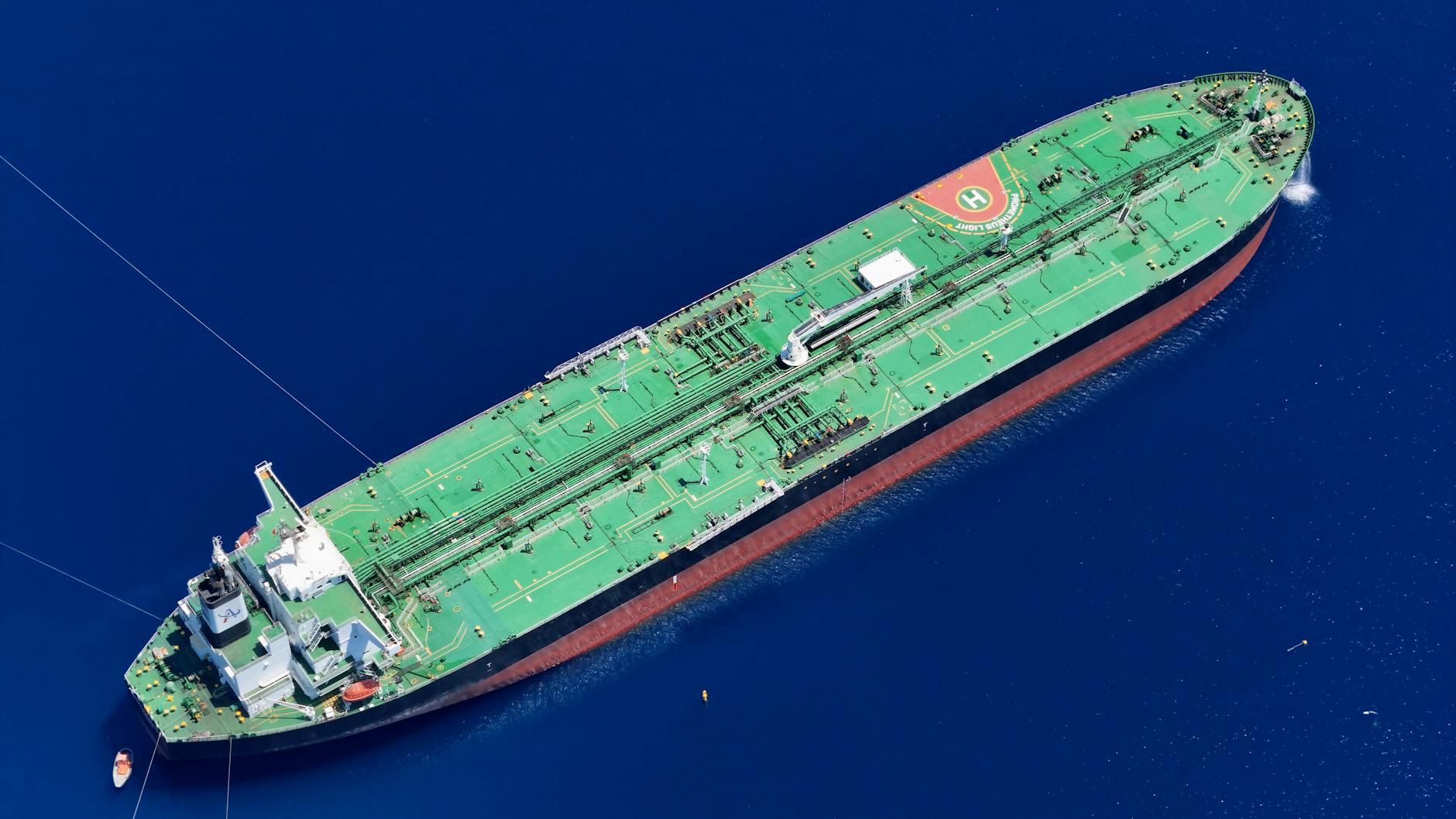
A Dramatic Dawn Operation in the English Channel
In the early hours of a Sunday morning, south of the Isle of Wight, a fleet of rigid inflatable boats cut through the dark waters of the English Channel toward a large oil tanker. Aboard were heavily armed Royal Marine commandos and officers from the National Crime Agency. Their target: the Smyrtos, an oil-laden vessel travelling from Russia to India, and one of the ships at the centre of what Western governments have come to call the Russian 'shadow fleet.' The six-hour operation, personally directed by Prime Minister Keir Starmer, marked the first time the United Kingdom has led a naval capture since Russia's full-scale invasion of Ukraine began in February 2022. It represents a significant and deliberate escalation in Britain's efforts to enforce sanctions against Moscow and disrupt the financial arteries that continue to fund the Kremlin's war machine.
What Is the Russian Shadow Fleet?
To understand why the boarding of a single tanker has sent shockwaves through diplomatic and maritime circles, it is essential to grasp the scale and significance of what is known as Russia's shadow fleet. Following the Western sanctions regime imposed after the invasion of Ukraine, Russia found itself increasingly cut off from conventional shipping and insurance markets dominated by Western companies. In response, Moscow — along with cooperative intermediaries and obscure corporate structures spread across multiple jurisdictions — assembled a sprawling network of ageing tankers operating under flags of convenience, often with murky ownership chains and minimal insurance coverage that meets international standards.
These vessels continue to transport Russian crude oil to buyers in Asia, the Middle East, and elsewhere, effectively circumventing the price cap mechanisms and trade restrictions that the G7 and European Union put in place to strangle Russia's hydrocarbon revenues. Estimates suggest that Russia earns hundreds of millions of dollars per month from oil exports enabled by this shadow fleet, revenue that flows directly into military procurement and sustains the prolonged conflict in Ukraine. Western intelligence services have tracked hundreds of such ships, and several European nations — including the Baltic states and Scandinavian countries — have called for more aggressive enforcement action, including physical interceptions.
The Smyrtos Interception: What Happened
The Smyrtos was identified as a vessel of interest to British authorities as it transited one of the busiest and most strategically sensitive shipping lanes in the world. The English Channel, which carries an enormous volume of global maritime trade daily, falls substantially within British jurisdictional waters, giving the UK legal grounds to act. As the tanker sailed south of the Isle of Wight, heading toward India with its cargo of Russian oil, British authorities moved.
The operation was a joint effort, combining the military precision of the Royal Marines — one of the world's most elite amphibious fighting forces — with the investigative and legal authority of the National Crime Agency, Britain's equivalent of the FBI for serious and organised crime. According to the accounts made public, commandos rappelled aboard the vessel in the pre-dawn darkness, secured the crew, and took control of the ship. The entire operation lasted approximately six hours. No serious incidents were reported, and the operation concluded without violence, demonstrating the professionalism of the British forces involved and, perhaps, the limited capacity of a commercial vessel's crew to resist a team of heavily armed special forces soldiers.
Prime Minister Starmer released footage of the operation on the social media platform TikTok shortly after it concluded — a notably modern communication choice that underscored the government's intent to broadcast this action as widely as possible, both domestically and internationally.
Starmer's Political Calculation: 'A Blow to Putin'
Keir Starmer was unambiguous about the political significance of what had occurred. The Prime Minister stated publicly that he had personally directed British troops to carry out the seizure, framing it explicitly as a blow against Russia and Vladimir Putin. This direct, personal ownership of the decision is telling. Starmer, who came to power with pledges of strong support for Ukraine and a tougher stance on adversaries undermining the international rules-based order, has been navigating a complex political environment in which he must demonstrate resolve abroad while managing considerable economic pressures at home.
By positioning this operation so prominently — through the TikTok video, through the explicit framing around Putin, and through the involvement of both military and law enforcement agencies — Starmer's government is making a clear statement. This is not merely a bureaucratic enforcement action; it is a deliberate act of state power, aimed at deterring further use of the English Channel by shadow fleet vessels and signalling to allies and adversaries alike that Britain remains willing to act forcefully in support of its stated values and commitments.
The involvement of the National Crime Agency alongside the Royal Marines also reflects the dual nature of the challenge posed by the shadow fleet: it is simultaneously a national security issue and a serious organised crime problem, involving money laundering, sanctions evasion, and the systematic circumvention of international law.
Legal Framework and Precedent
The legality of intercepting and boarding a foreign-flagged commercial vessel on the high seas — or even in territorial waters — is a complex area of international maritime law. The right of visit and the grounds for boarding are codified under the United Nations Convention on the Law of the Sea (UNCLOS) and various bilateral agreements, but enforcement actions of this nature remain rare and politically sensitive.
The fact that this is described as the first time the UK has led such a naval capture since the war in Ukraine began suggests that previous discussions or opportunities for similar actions may have been foregone due to legal uncertainty, diplomatic considerations, or operational constraints. The Starmer government appears to have judged that the legal basis was sufficiently robust, the political moment was right, and the potential deterrent effect was worth the diplomatic risks involved.
Precedents for such actions exist, most notably in anti-piracy operations off the coast of Somalia, where multinational naval forces have boarded vessels for decades. However, those operations typically involve clear cases of piracy under universally accepted legal frameworks. Applying similar logic to sanctions enforcement against a permanent member of the UN Security Council — Russia — operating through nominally civilian commercial vessels is a significantly more contentious step. Other European nations will be watching closely, both to assess the diplomatic fallout and to consider whether they might undertake similar actions in their own territorial waters.
Russia's Likely Response and Diplomatic Fallout
Moscow's reaction to the interception was not detailed in the material available at the time of writing, but Russia's broader pattern of responses to Western enforcement actions provides a reasonable basis for anticipation. The Kremlin typically combines public denunciations of what it characterises as piracy or illegal interference with private efforts to adapt its operational methods — altering routes, reregistering vessels, or finding new intermediaries — to continue oil exports with minimal disruption.
In diplomatic terms, Russia is likely to raise the matter at the United Nations and through bilateral channels, accusing the UK of violating international maritime law and setting a dangerous precedent. Moscow will be particularly concerned about the signal this sends to other countries through whose waters shadow fleet tankers routinely pass, including the Danish straits — a critical chokepoint for Baltic Sea traffic — and the Turkish straits. If the UK's action emboldens other nations to take similar steps, the logistical challenges for Russia's shadow fleet could multiply considerably.
For India, the intended destination of the Smyrtos cargo, the interception is also diplomatically awkward. New Delhi has maintained a carefully balanced position throughout the Ukraine conflict, refusing to condemn Russia outright and continuing to import Russian oil at discounted prices. The seizure of a tanker bound for India places the Indian government in an uncomfortable position, potentially prompting quiet diplomatic representations to London even as India refrains from public criticism of the operation.
The Broader Western Sanctions Strategy
This interception does not exist in isolation. It is the latest, and arguably most dramatic, manifestation of a sustained Western campaign to tighten the financial and logistical noose around Russia's energy sector. Since the invasion of Ukraine, the European Union has imposed multiple rounds of sanctions targeting Russian oil, gas, and financial institutions. The G7 price cap mechanism, introduced in December 2022, attempted to limit the price at which Western-insured and Western-shipped Russian oil could be sold globally, though its effectiveness has been debated by economists and policy analysts.
The shadow fleet was, in many respects, Russia's direct answer to these constraints. By operating outside Western insurance and shipping markets, Moscow found a way to keep its oil flowing and its revenues relatively intact. Western governments have been playing catch-up ever since, adding shadow fleet vessels to sanctions lists, pressuring flag-of-convenience registries, and working with ports and insurers to refuse services to suspected vessels.
Physical interceptions, however, represent a qualitative escalation. They impose real costs — lost cargoes, detained vessels, potential criminal investigations — in a way that a listing on a sanctions database does not. If the UK can demonstrate that shadow fleet tankers transiting its waters face genuine risk of seizure, it may succeed in diverting some of this traffic away from British jurisdictional reach, or in deterring some vessel operators from participating in the fleet altogether.
What Comes Next: Implications for the Conflict and European Security
The boarding of the Smyrtos is likely to have ripple effects across several domains simultaneously. Within the UK, it will generate political debate: supporters of a hard line on Russia will praise it as overdue and necessary, while critics may raise questions about the legal basis, the diplomatic risks, and the potential for escalation in an already volatile international environment.
Among Ukraine's other allies, particularly in Northern and Eastern Europe, the operation is likely to be welcomed as a demonstration of willingness to move beyond declaratory policy into concrete enforcement action. The Baltic states — Estonia, Latvia, Lithuania — and Poland have been particularly vocal in calling for more aggressive measures against the shadow fleet, which has also been linked to environmental risks due to the poor condition of many of the vessels involved and their lack of adequate insurance coverage.
For the broader arc of the Ukraine conflict, the significance is both material and symbolic. Materially, each tanker intercepted represents lost revenue for Moscow, though a single vessel is a small fraction of the total fleet. Symbolically, the operation demonstrates that the West retains both the will and the capability to impose costs on Russia in creative and unexpected ways, even as the land war in Ukraine grinds on. Whether this translates into a sustained enforcement campaign, or remains an isolated high-profile action, will be determined in the months ahead — and will depend heavily on the diplomatic and legal consequences that follow from this first, historic interception.
The English Channel has been a stage for defining moments in British and European history for centuries. On this particular Sunday morning, in waters that have witnessed the Spanish Armada, the Dunkirk evacuation, and the D-Day convoys, Royal Marine commandos boarded an oil tanker in the dark — and sent a message that will resonate far beyond the Channel's grey waves.
Sources
About the author
Redazione NotiziHubThe NotiziHub newsroom selects the stories that matter from leading outlets and tells them clearly and verifiably, always citing its sources. Articles are produced by our editorial system with the help of artificial intelligence — the method is set out in our Editorial policy.

