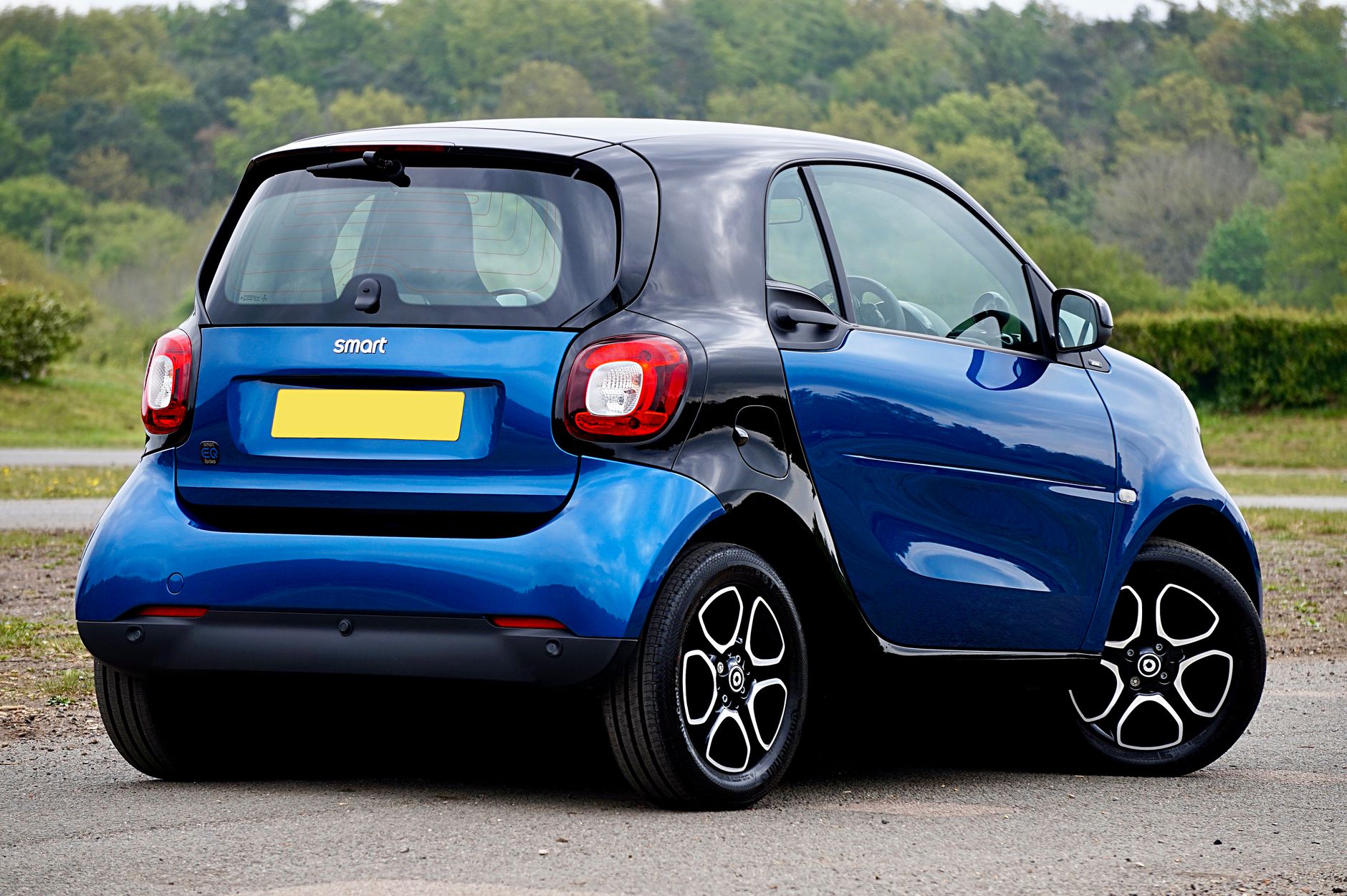
Electric Car vs Petrol: Is It Really Worth It in 2026?
The question is on the lips of every Italian motorist: is buying an electric car in 2026 really a smart choice, or does the traditional petrol engine remain the most sensible solution? The answer, as often happens in the automotive world, is not straightforward — it depends on driving habits, where you live, and your ability to access available EV incentives. But this year's data tell a much more nuanced story than even just three years ago.
The market has changed dramatically. Prices for electric cars have dropped significantly thanks to increasingly fierce competition between European, Chinese, and American manufacturers, and Italy's public charging network has finally reached acceptable coverage in major cities and along highways. At the same time, petrol prices remain around 1.75-1.85 euros per liter, making the economic comparison increasingly favorable to electric propulsion.
In this article we analyze in depth all the factors at play: purchase costs, running expenses, available incentives, real range, and specific comparison in the SUV segment, which today represents the best-selling vehicle category in Italy. If you're considering changing cars in the coming months, this guide will help you make the right choice.
Purchase Costs and TCO: What Does Switching to Electric Really Cost?
The first element to consider is the list price. In 2026, a compact electric car — such as a Renault 5 E-Tech, a Volkswagen ID.2 or a Leapmotor C10 — costs between €22,000 and €32,000. A mid-range C-D segment electric SUV, such as a Tesla Model Y, a Kia EV6 or a Stellantis C5 Aircross Electric, ranges from €38,000 to €55,000. Equivalent petrol models generally cost €5,000 to €10,000 less.
However, the purchase price is just the tip of the iceberg. The Total Cost of Ownership (TCO) — that is, the total cost of ownership over five years — tells a different story:
- Fuel vs charging costs: with a 6 l/100 km petrol car and an average price of €1.80/l, you spend about €1,620 per year for 15,000 km. An electric car with consumption of 18 kWh/100 km, recharged mainly at home at €0.22/kWh (night-time dual-rate tariff), costs about €594 per year — a saving of over €1,000 annually.
- Maintenance: electric eliminates engine oil, filters, timing belt, clutch. Industry studies confirm that routine maintenance on an electric car is on average 35-40% cheaper than an equivalent petrol car.
- Insurance: in 2026, motor insurance rates for electric cars are slightly higher at some insurers (due to higher body repair and battery replacement costs), but many insurers offer "green" discounts that level the difference.
- Residual value: after years of uncertainty, electric cars are recovering ground on residual value, especially premium models. Electric SUVs from well-established brands retain 45-50% of value after three years.
The mathematical conclusion is that, with home charging and annual mileage of at least 15,000 km, the break-even point compared to an equivalent petrol car is reached on average in 4-5 years.
2026 EV Incentives: What Italy's Regulations Provide
EV incentives represent one of the most decisive variables in the choice. The ministerial decree in effect in 2026 provides a tiered system with bonuses differentiated based on the household's ISEE and scrapping of an old vehicle.
For electric cars (0 g/km CO₂):
- Up to €13,000 incentive with scrapping of Euro 0-2 vehicle and ISEE below €30,000
- Up to €9,000 without scrapping or with ISEE above threshold
- Vehicle price cap: €42,000 (excluding VAT) to access base incentive
For petrol/mild hybrid cars:
- Much lower incentives, between €1,500 and €3,000, only with scrapping of Euro 0-3 vehicles
- No incentive for full hybrid petrol without plug-in above 130 g/km CO₂
For plug-in hybrid SUVs (PHEV):
- Average incentive between €4,000 and €6,500, with mandatory scrapping
- Price cap of €54,000 (excluding VAT)
An important element of 2026 is the reserved funding for low-to-middle income families: the government has allocated a specific share of incentives reserved for households with ISEE below €30,000, who can thus access discounts that stack with manufacturer offers. The result is that in some cases a €38,000 electric SUV can be purchased for less than €28,000.
It is essential to monitor the MASE portal (Ministry of Environment and Energy Security), because funds run out quickly — often within a few weeks of opening the booking window.
Electric SUV vs Petrol SUV: The Direct Comparison That Matters Most
The SUV segment is the most relevant for this analysis: in 2026 it represents over 48% of registrations in Italy. Let's compare two real, emblematic models of their respective categories.
Electric SUV: Kia EV5 (available in Italy from late 2025)
- List price: €41,900
- With incentives: about €33,000 (with Euro 2 scrapping and average ISEE)
- WLTP range: 520 km; real highway range: about 370 km
- Home charging cost: ~€9.70 per 100 km
- Estimated annual maintenance: €250-350
Petrol SUV: Volkswagen Tiguan 1.5 TSI 150 CV
- List price: €36,500
- With incentives (very limited): about €35,000
- Real average consumption: 7.2 l/100 km
- Petrol cost per 100 km: ~€13
- Estimated annual maintenance: €500-700
5-Year Summary (18,000 km/year mileage):
| Item | EV5 Electric | Tiguan Petrol | |---|---|---| | Effective price | €33,000 | €35,000 | | Fuel/charging 5 years | €8,730 | €11,700 | | Maintenance 5 years | €1,500 | €3,000 | | Total TCO | €43,230 | €49,700 |
The difference is over €6,400 in favor of electric over five years, with high mileage and home charging. Without a home wallbox, the advantage shrinks but doesn't disappear (public AC charging costs approximately €0.40-0.50/kWh, bringing the cost per 100 km to around €17-18 — close to petrol, but with maintenance savings still valid).
When Petrol Still Makes Sense: Real-World Scenarios
Despite numbers often favoring electric, there are concrete scenarios where a petrol car — or at most a full hybrid — remains the more rational choice:
-
Living in an apartment building without possibility of installing a wallbox: without home charging, the economic advantages of electric become much narrower. The process for installing a charging station in apartments has been simplified by regulations, but isn't always possible due to structural issues or condo association decisions.
-
Low annual mileage (under 8,000-10,000 km): those who use the car only on weekends or for short trips accumulate savings very slowly, and the 5-year TCO may remain unfavorable to electric.
-
Frequent long trips with need for absolute flexibility: those who regularly drive across Italy from north to south, in areas still poorly covered by rapid charging networks, may find planning charging stops stressful. Petrol SUVs still offer greater flexibility, especially in southern Italy and inland areas.
-
Limited budget without access to incentives: if you're already excluded from incentives (for example, having already benefited from bonuses in previous years, or exceeding the ISEE threshold), buying a new electric car can be financially onerous.
-
Predominant use in mountains with harsh winter temperatures: intense cold reduces real range of electric vehicles by 20-30%, a factor not to underestimate for those living in alpine areas.
Frequently Asked Questions
Q: How long does it take to charge an electric car at home? A: With a 7.4 kW wallbox (the most common in private homes), a 60 kWh battery charges fully in about 8-9 hours — perfect for overnight charging. With a standard Schuko outlet at 2.3 kW, charging times extend to over 24 hours, so a dedicated wallbox is strongly recommended.
Q: Can 2026 EV incentives be combined with dealer discounts? A: Yes, in most cases. The state bonus stacks with any commercial discounts from the manufacturer or dealership network, sometimes bringing very significant reductions to the final price. However, you need to verify case by case with your dealer, as some brands impose specific conditions.
Q: Is an electric SUV suitable for the highway and long trips? A: Yes, current models with WLTP range over 500 km are suitable for long trips, provided you plan charging stops. On Italy's highway network, rapid charging stations of 150-350 kW are available that allow you to recover 80% of battery in 20-30 minutes.
Q: What happens to an electric car battery after 10 years? A: Most manufacturers guarantee the battery for 8 years or 160,000 km, with a minimum residual capacity of 80%. After 10 years of normal use, expect a capacity loss of 15-20%, which translates to reduced range. Batteries don't "suddenly die" — degradation is gradual and manageable.
Q: Is it worth buying a used electric car instead of new? A: It can be a very convenient solution, especially for models with 2-3 years of life that have already experienced significant value depreciation. However, you should verify battery condition through proper diagnostics, check that the manufacturer warranty is still active, and prefer models with good reliability reputation (Tesla, Kia, Hyundai, among the most recommended).
Conclusion
In 2026, the question is no longer "if" the electric car is worth it, but "for whom" it really makes sense. Those who can install a wallbox at home, drive at least 12,000-15,000 km annually, and can access available EV incentives, will find the electric car — and particularly mid-range electric SUVs — an economically and practically superior choice to the petrol engine. Cumulative savings over five years can exceed €5,000-7,000, without counting environmental benefits and practical advantages like driving in urban restricted traffic zones.
For everyone else — those living in apartments, driving few kilometers, or with extreme flexibility needs — petrol remains a legitimate and rational choice, at least until the public charging network reaches comprehensive coverage across the entire nation.
Our final advice: before signing any contract, use an online TCO simulator with your real usage data, verify your ISEE status to access incentives, and if possible, try an electric car for a few days through a rental service. Direct experience is the best evaluation tool.