Canada's World Cup Opener Against Bosnia-Herzegovina: A Nation's Soccer Coming-of-Age Moment
As Canada hosts its first World Cup match in decades, the tournament opener against Bosnia-Herzegovina signals a genuine cultural shift in a country long defined by hockey.

A Nation Steps Onto the World Stage
When the referee's whistle blew to kick off Canada's opening match of the 2026 FIFA World Cup against Bosnia-Herzegovina, it marked far more than just the start of another group-stage fixture. For a country that has spent most of its sporting identity wrapped in ice and defined by hockey, the moment represented a legitimate generational inflection point — a declaration that soccer has arrived in Canada not as a curiosity, but as a cultural force. The match, played on June 13, 2026, served as one of the tournament's earliest openers, and the weight of expectation on Jesse Marsch's squad was unlike anything a Canadian soccer team had experienced before.
Canada, as a co-host nation alongside the United States and Mexico, did not need to qualify through the traditional CONCACAF route. But the pressure of performing on home soil — in front of fans who have grown up watching the likes of Alphonso Davies and Jonathan David become world-class footballers — added a layer of intensity that qualification matches simply could not replicate. This was the real thing, and Canada's players knew it.
The Starting Eleven and Tactical Setup
Jesse Marsch named a lineup that reflected both the considerable talent at Canada's disposal and the tactical pragmatism required when facing a compact, experienced European side. In goal, Maxime Crépeau provided veteran experience between the posts. The defensive line featured Alistair Johnston, De Fougerolles, Cornelius, and Richie Laryea — a back four capable of transitioning quickly into attack through the wide areas, a hallmark of Marsch's preferred style.
In midfield, the engine room was anchored by Stephen Eustáquio, one of the most complete central midfielders Canada has ever produced, flanked by Ismaël Koné, whose physical presence and range of passing have made him one of European football's most sought-after young players. Liam Millar provided creative width, while the attacking partnership of Jonathan David and Tajon Buchanan offered pace, directness, and clinical finishing ability. Nigeria-born Oluwaseyi completed the forward line, giving Canada's attack a dynamic and multi-dimensional edge.
The lineup on paper was arguably Canada's strongest in history — a generation of players who have proven themselves consistently at the highest levels of club football in Europe, now converging at a home World Cup with genuine ambitions of advancing beyond the group stage.
Bosnia-Herzegovina: A Difficult First Test
Canada's opponents for the opening fixture, Bosnia-Herzegovina, represented no easy introduction to tournament football. A nation with a relatively short but eventful footballing history, Bosnia qualified for their own World Cup for the first time back in 2014 in Brazil, where they showed the world they were capable of competing at the highest level. This generation of Bosnian footballers has continued to develop through a competitive European qualifying process, and they arrived in North America with a squad blending experienced veterans with hungry younger players.
The tactical challenge Bosnia posed was significant. Bosnian teams have historically been organized defensively, difficult to break down, and capable of punishing opponents on the counter-attack. For Canada, whose natural inclination under Marsch is to press high and play an attacking, possession-oriented brand of football, the match offered a genuine examination of their ability to unlock a disciplined defense in front of a home crowd.
The stakes were equally meaningful for Bosnia. As a smaller nation competing against a co-host on foreign soil, the match carried enormous symbolic weight — a chance to announce themselves on the world stage once again and demonstrate that European football's middle tier can compete with the emerging powers of the Americas.
Soccer's Cultural Revolution in Canada
Perhaps the most significant story surrounding Canada's World Cup opener is not the match itself, but the broader cultural transformation it represents. For decades, Canada's sporting identity was dominated almost entirely by ice hockey — the NHL was not just a sports league but a national institution, woven into the fabric of Canadian identity from the frozen ponds of rural Quebec to the arenas of Toronto and Vancouver. Soccer existed, certainly, but it occupied a secondary position, associated largely with immigrant communities and suburban youth leagues rather than with national pride.
That story has changed dramatically. According to a recent report by Jumpstart, a Canadian charitable organization focused on sport participation, soccer has now surpassed hockey and every other sport in terms of youth participation across the country. The numbers reflect a demographic and cultural shift decades in the making: Canada's increasingly diverse population has brought with it deep footballing traditions from Latin America, Africa, the Caribbean, the Middle East, and Europe. The result is a grassroots soccer culture that has quietly grown into something enormous.
This is the pipeline that produced Jonathan David, born in Brooklyn to Haitian parents and raised partly in Ottawa, who became one of the most prolific scorers in Ligue 1 history. It produced Alphonso Davies, born in a Ghanaian refugee camp in Buduburam and raised in Edmonton, who became a Champions League winner with Bayern Munich. It produced Ismaël Koné, a Montreal native of Guinean descent who has established himself in one of Europe's most competitive leagues. Canada's World Cup squad is, in many ways, a portrait of the country itself — multicultural, dynamic, and deeply connected to the global game.
Jesse Marsch and the Architecture of Belief
Central to Canada's emergence as a genuine footballing nation has been the role of head coach Jesse Marsch, the American manager who brought with him a track record of success in pressing-intensive football honed across stints at Red Bull Salzburg, RB Leipzig, and Leeds United. Marsch was appointed with a specific mandate: take a talented but underachieving group of players and build them into a cohesive, winning unit capable of making history on home soil.
In the lead-up to the tournament opener, Marsch was characteristically direct and confident in his assessments. He spoke of feeling a "real momentum behind this team and behind this moment" — a phrase that captured something genuine about the atmosphere surrounding Canada's preparations. Unlike the cautious, hedging language that coaches often deploy before major tournaments, Marsch's tone suggested a group of players and staff that believed, genuinely, that something historic was within reach.
This psychological dimension should not be underestimated. One of the persistent criticisms of Canadian football over the years has been a tendency toward underperformance when the stakes are highest — a kind of collective imposter syndrome that manifested in nervous, tentative displays at crucial moments. Marsch's coaching philosophy, which places significant emphasis on mentality, identity, and collective belief, has been designed specifically to address this tendency. The question heading into the Bosnia match was whether that work had genuinely transformed the team's competitive psychology, or whether the weight of the occasion would prove too heavy.
The World Cup in North America: Context and Stakes
The 2026 World Cup, jointly hosted by Canada, the United States, and Mexico, represents the largest edition of the tournament in the competition's history, featuring 48 nations for the first time following FIFA's expansion of the format. Matches are spread across sixteen host cities across three countries, creating a tournament of genuinely continental scale.
For Canada specifically, the decision to co-host carries both opportunity and pressure. The Canadian Soccer Association has invested significantly in infrastructure, fan engagement, and grassroots development in the years leading up to the tournament, acutely aware that a successful World Cup on home soil could accelerate soccer's growth trajectory in the country by a generation. The commercial implications are equally significant — a deep run by the host nation would generate television ratings, sponsorship interest, and grassroots participation numbers that could reshape the sport's financial landscape in Canada for decades.
The opening match against Bosnia-Herzegovina, then, was not merely a game. It was the beginning of an examination of whether all the investment, all the talent development, all the cultural enthusiasm could be channeled into results on the pitch when the world was watching.
What This Match Means for the Tournament Ahead
Beyond the immediate result, Canada's performance in the opening match set the tone for what promises to be a genuinely compelling group-stage campaign. A positive result against Bosnia-Herzegovina would provide the platform for Canada to approach their remaining group matches with confidence and momentum — crucial ingredients for any team hoping to advance to the knockout rounds.
The broader narrative arc of Canada's World Cup journey carries several compelling threads. There is the question of whether Jonathan David, one of the tournament's most technically gifted forwards, can translate his extraordinary club form onto the World Cup stage and establish himself as a genuine Golden Boot contender. There is the tactical intrigue of watching Marsch's system tested against a variety of international styles. And there is the overarching story of a nation discovering its footballing identity in real time, before a global audience.
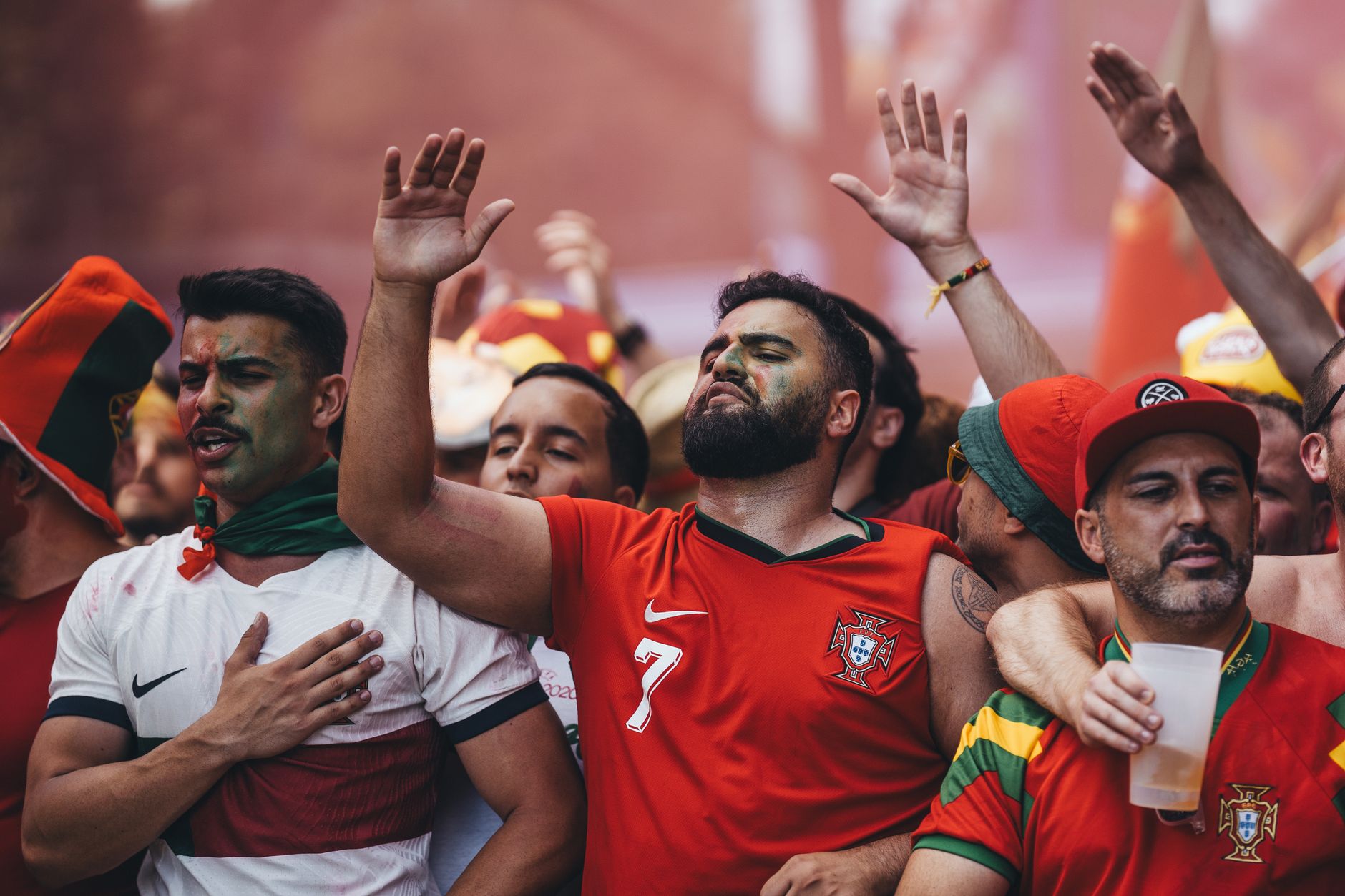
For casual fans in Canada who might previously have tuned in to hockey playoffs or NFL games as their sporting priority, the World Cup represents an invitation to invest in something new — or rather, something that has been growing quietly for years and has finally arrived at the center of national attention. The packed stadiums, the diverse crowds, the flags and scarves and painted faces representing dozens of different nations all converging on Canadian cities: this is what soccer looks like when it fully arrives in a country.
A Sporting Nation in Transition
The symbolism of Canada opening its home World Cup against Bosnia-Herzegovina will not be lost on historians of the sport. Two nations, one an emerging power hosting football's greatest tournament for the first time in a meaningful capacity, the other a small European country with its own complex history of forging a national identity through sport — both stepping onto the world stage with something to prove.
For Canada, the journey from a country where soccer was an afterthought to one where it has overtaken hockey in youth participation, and where the national team features genuine world-class talent across multiple positions, has been remarkable. It did not happen overnight. It was built through decades of immigration, community investment, coaching development, and the patient nurturing of talent in academies at home and abroad.
Jesse Marsch's assessment of the moment — that there is real momentum behind this team and this moment — reflects a truth that extends far beyond tactics and formations. Canada's World Cup opener was the culmination of a long, quiet revolution in the country's sporting culture. Whether the results on the pitch match the scale of the occasion remains to be seen, but the transformation in what soccer means to Canadians is already, undeniably, real.
Sources
About the author
Redazione NotiziHubThe NotiziHub newsroom selects the stories that matter from leading outlets and tells them clearly and verifiably, always citing its sources. Articles are produced by our editorial system with the help of artificial intelligence — the method is set out in our Editorial policy.